13 hr 30 min
Humantay Lake Day Trek from Cusco
- Expert local guide
- Small group
- Skip-the-line access
- Free cancellation
Laguna Humantay Tour — Guided Treks to the Glacial Lake
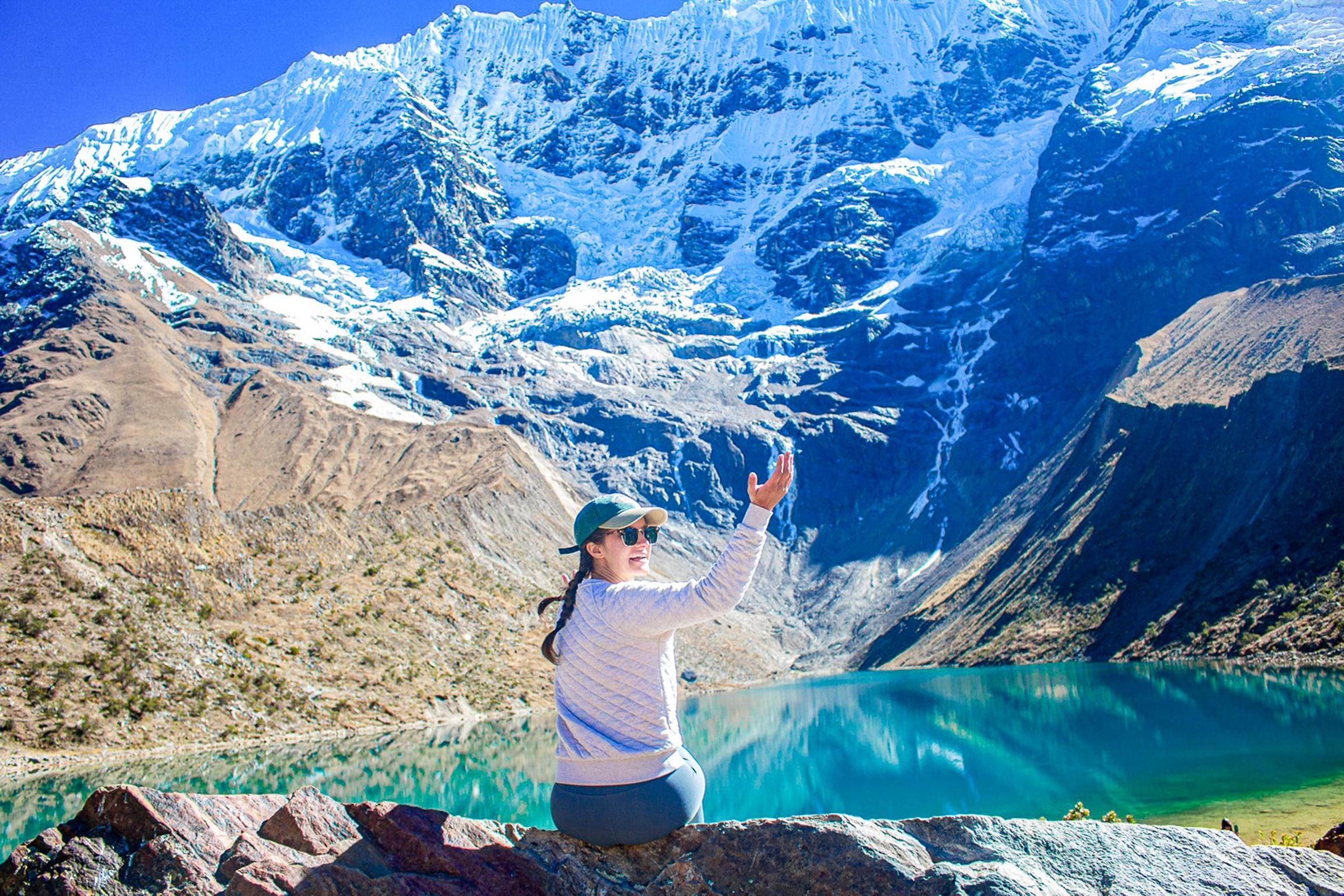
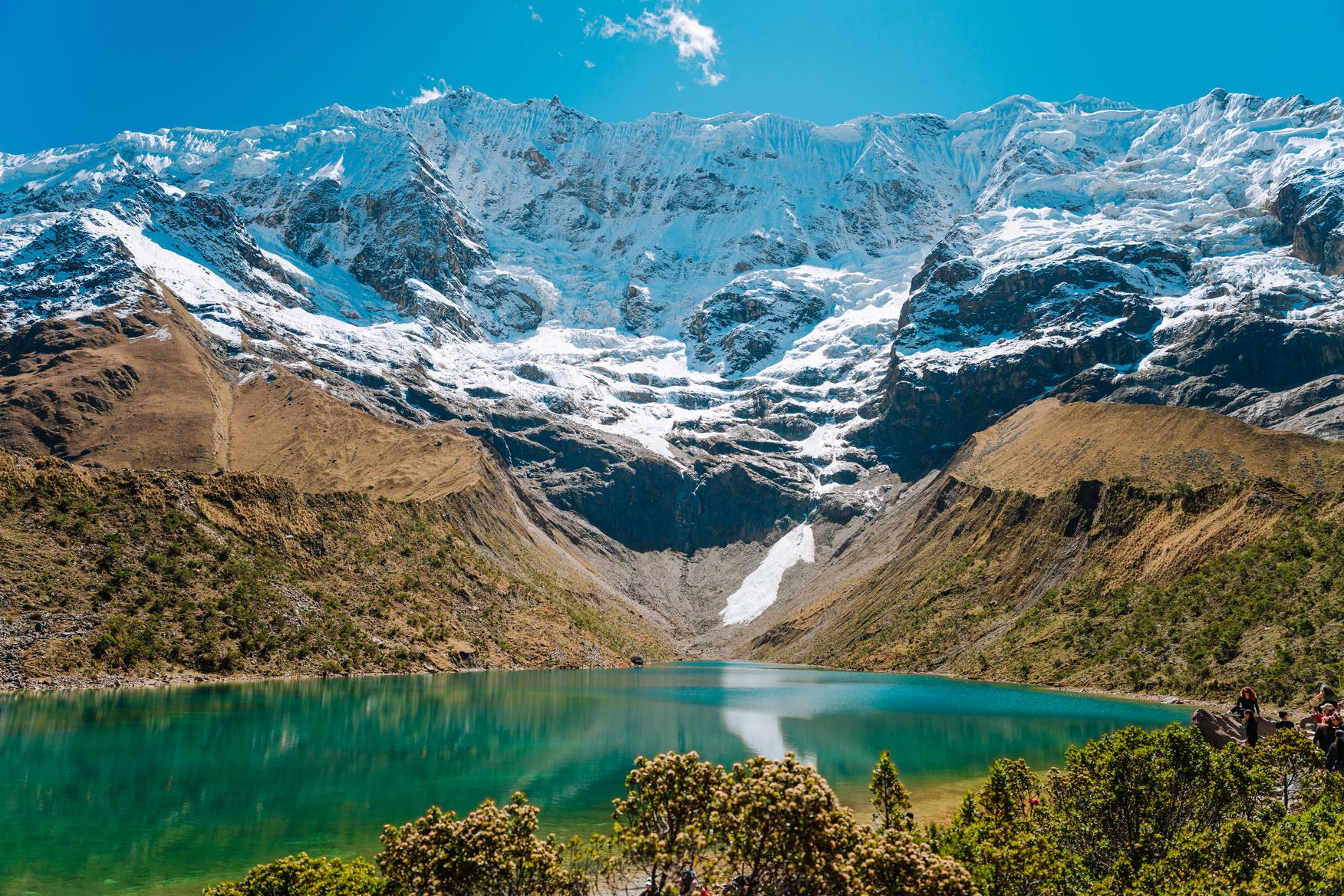
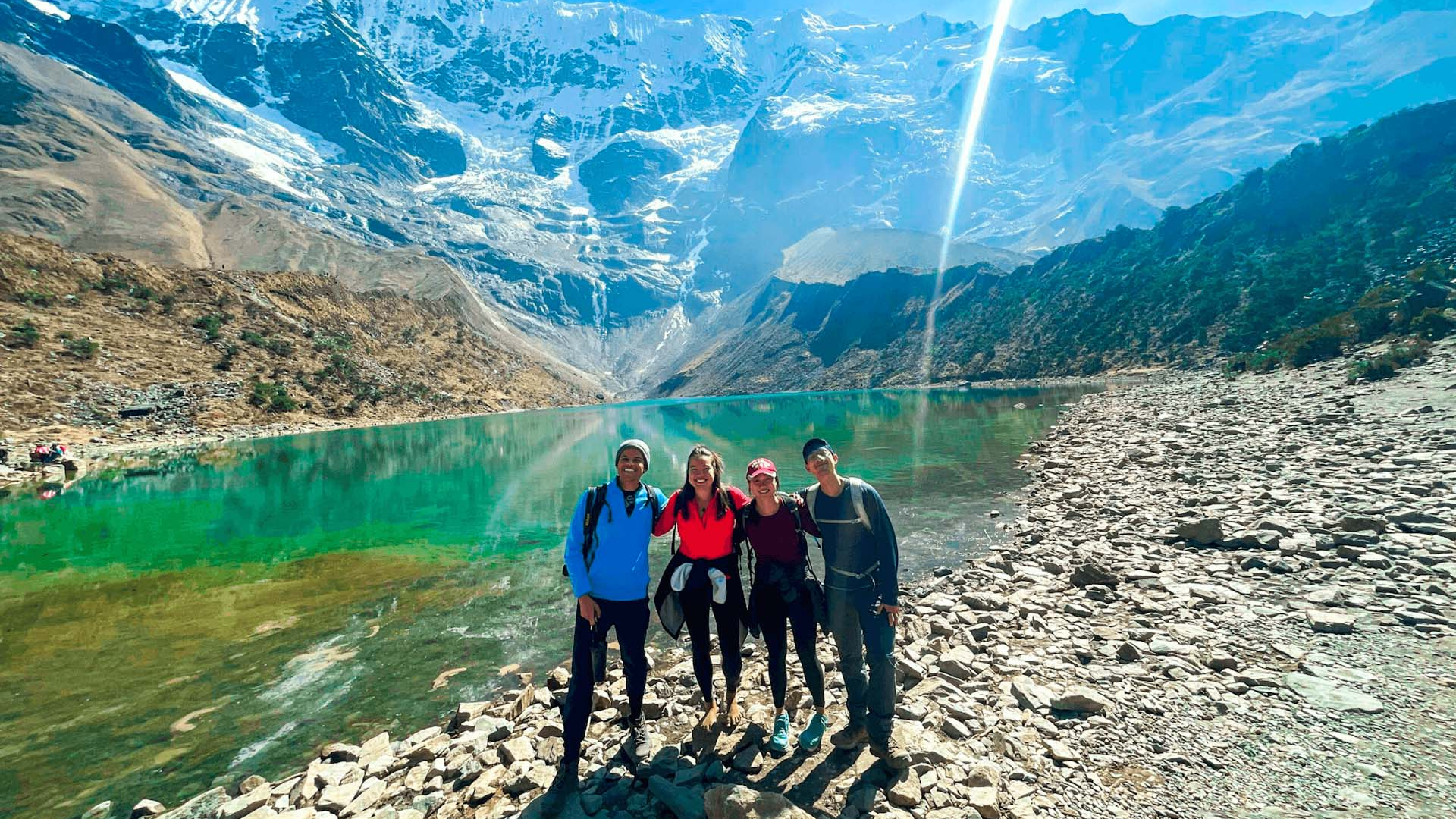
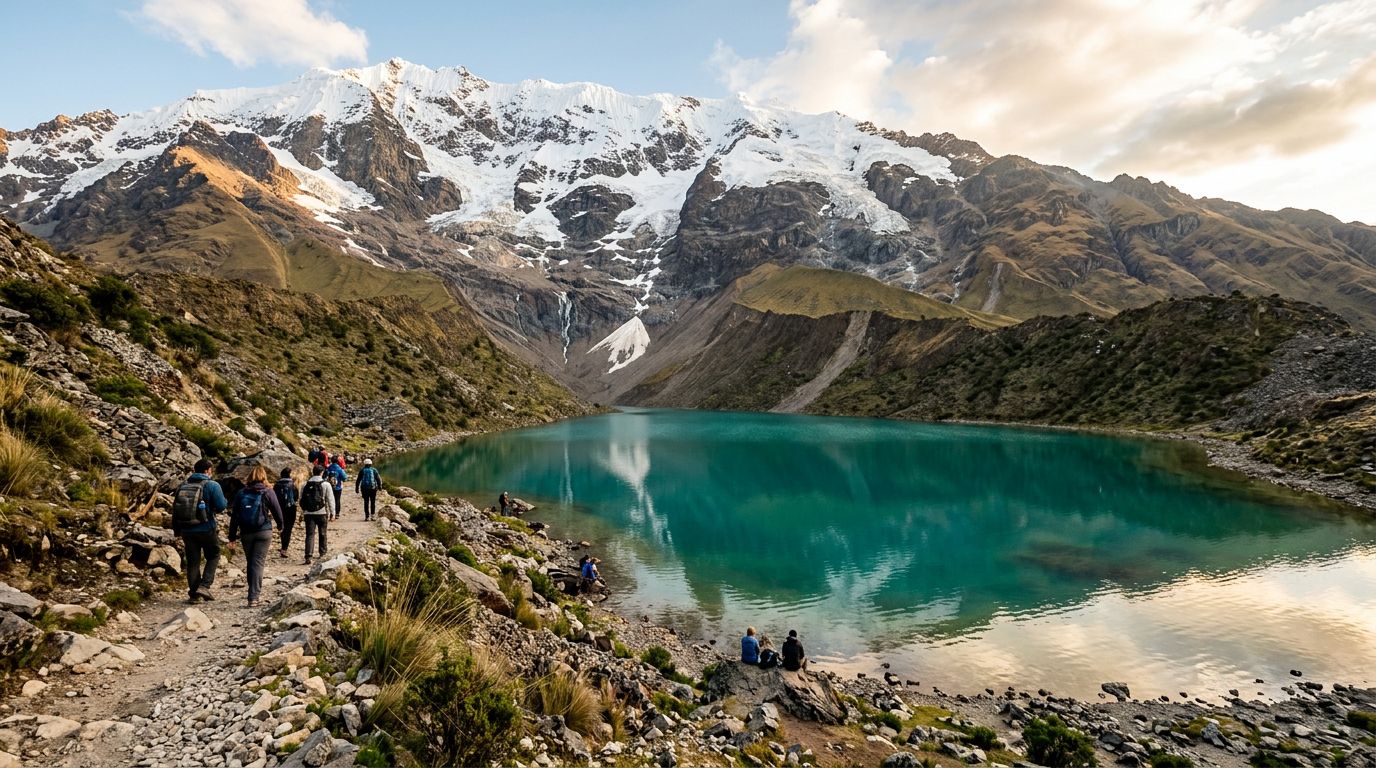
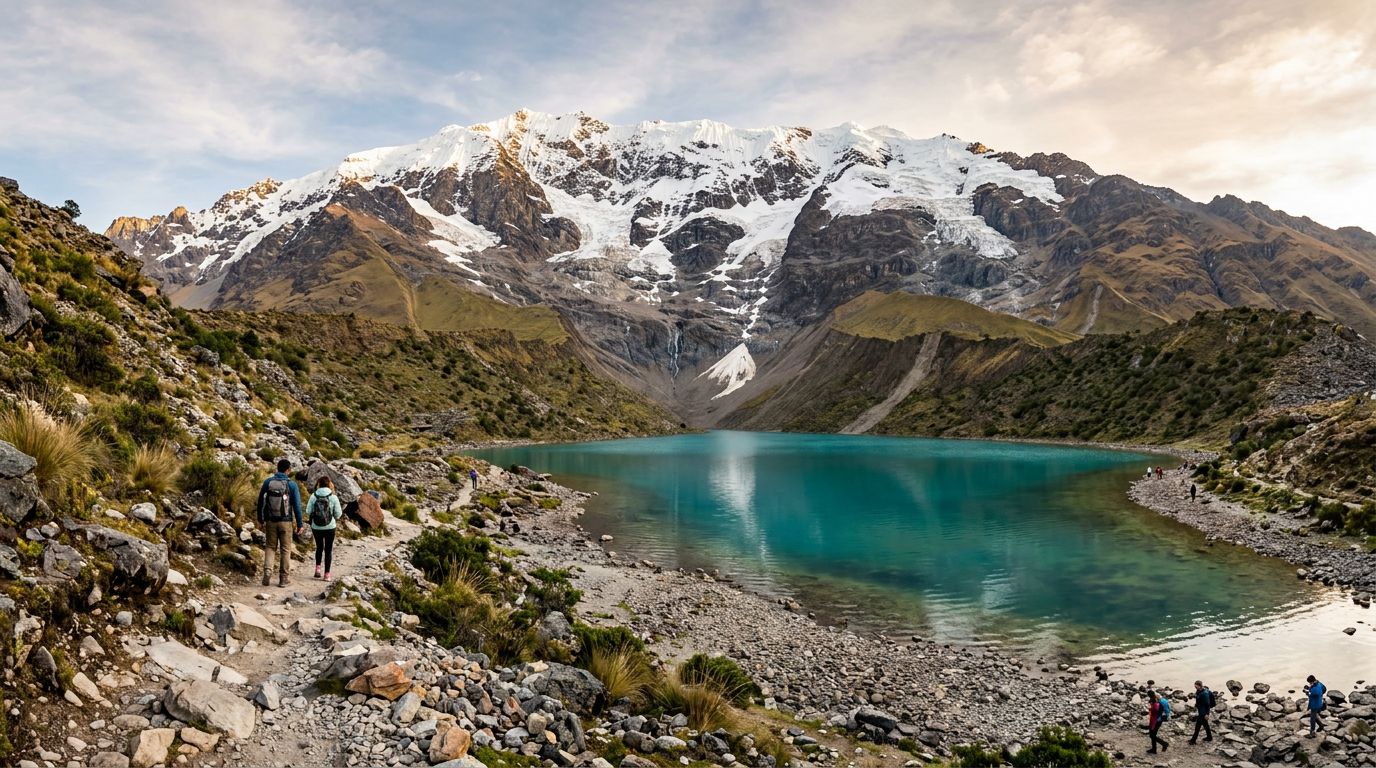
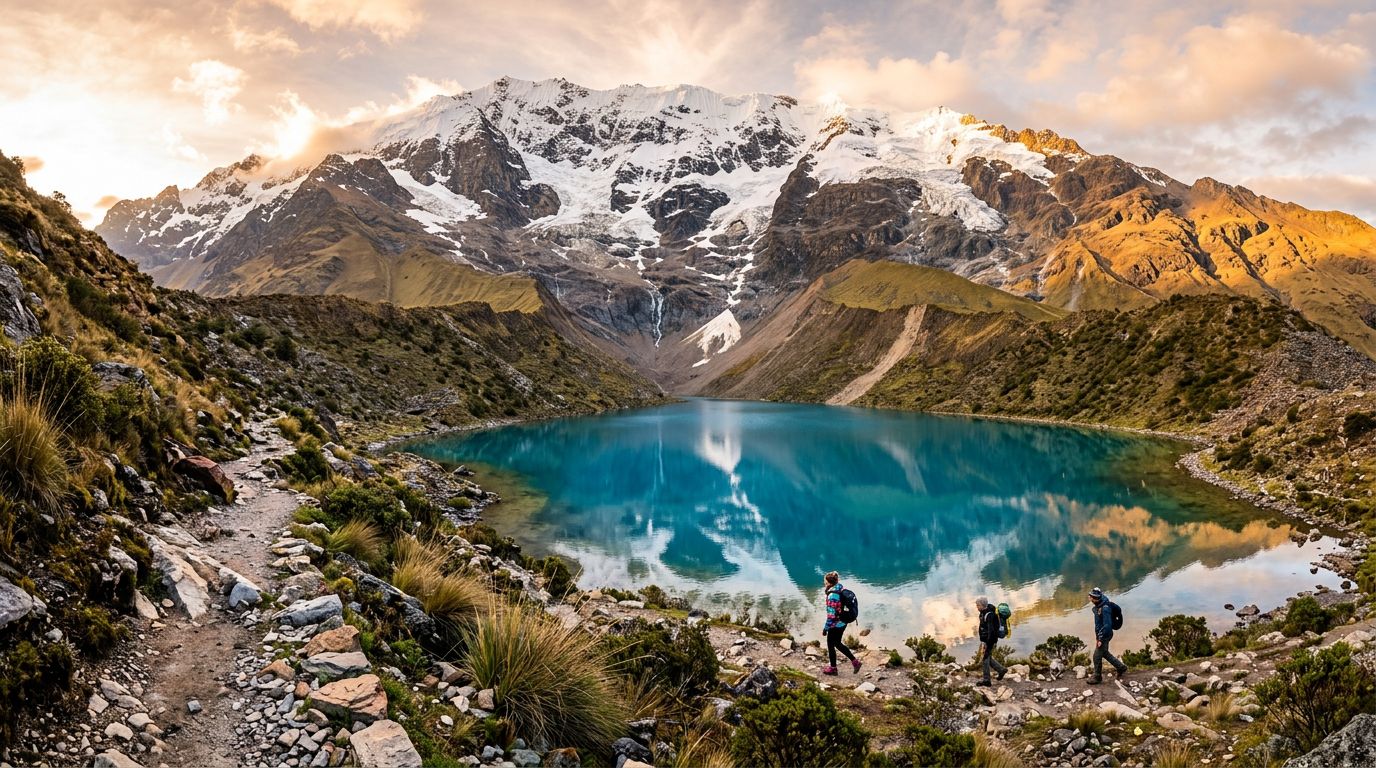
Turquoise waters ringed by snow peaks, a high-Andean jewel at 4,200 meters.
Compare fares, pick the fit — all bookings are mobile-voucher and eligible for free cancellation where shown.
13 hr 30 min
14 hr
10 hr
| Experience | Duration | Rating | Lunch | Skip-the-line | Guide | Small group | Price | |
|---|---|---|---|---|---|---|---|---|
|
Guided Experience
Most popular
Humantay Lake Day Trek from Cusco
|
13 hr 30 min | ★ 4.8 | ✓ | ✓ | ✓ | ✓ | €21 | Book → |
|
Guided Experience
Humantay Lake Full-Day Trek from Cusco
|
14 hr | ★ 4.8 | ✓ | ✓ | ✓ | ✓ | €19 | Book → |
|
Guided Experience
Humantay Lake Early Morning Tour with Guide
|
10 hr | ★ 4.2 | ✓ | ✓ | ✓ | ✓ | €28 | Book → |
Worth it for fit hikers seeking altitude lakes
A laguna humantay tour demands real physical effort—the final 1.5-kilometer approach climbs nearly 200 vertical meters at 4,200 meters elevation, where thin air turns moderate slopes into a cardiovascular test. For those prepared for altitude and comfortable with steep terrain, the payoff is immediate: the glacial lake sits in a cirque carved by ice, its turquoise water fed directly by Humantay Glacier above. The 30 PEN conservation fee grants access to Soraypampa trailhead; guided options bundle transport from Cusco and meals, while horseback alternatives reduce the trekking load for visitors with lower fitness reserves. The Humantay Lake trek rewards exertion with high-Andes immersion—dawn light on snowfields, minimal infrastructure, and a landscape shaped entirely by glacial processes. If you arrive underprepared for altitude or expect a leisurely walk, the climb will overshadow the scenery; if you respect the elevation and pace yourself, the lake and surrounding peaks justify the effort.
Bottom line: Laguna Humantay tours deliver tangible value for altitude-ready trekkers who prioritize glacial landscapes over comfort, but underprepared visitors will struggle to enjoy what they paid to see.
They complement each other; most visitors who do both call the Rainbow Mountain trek the more physically demanding challenge. Choosing a laguna humantay tour often provides a more focused high-altitude test before tackling the extreme elevations of the Vilcanota Range.
|
Top pick Humantay Lake |
Rainbow Mountain | |
|---|---|---|
| Max Altitude | 4,200 m (13,779 ft) | 5,036 m (16,522 ft) |
| Trailhead Elevation | 3,900 m (12,795 ft) | 4,600 m (15,091 ft) |
| Hike Distance (One Way) | 2 km (1.24 miles) | 3.5 km (2.17 miles) |
| Ascent Duration | 1–1.5 hours | 1.5–2 hours |
| Core Terrain | Steep, rocky incline | Gradual with steep finish |
| Typical Pickup | 04:00–05:00 AM | 02:30–04:00 AM |
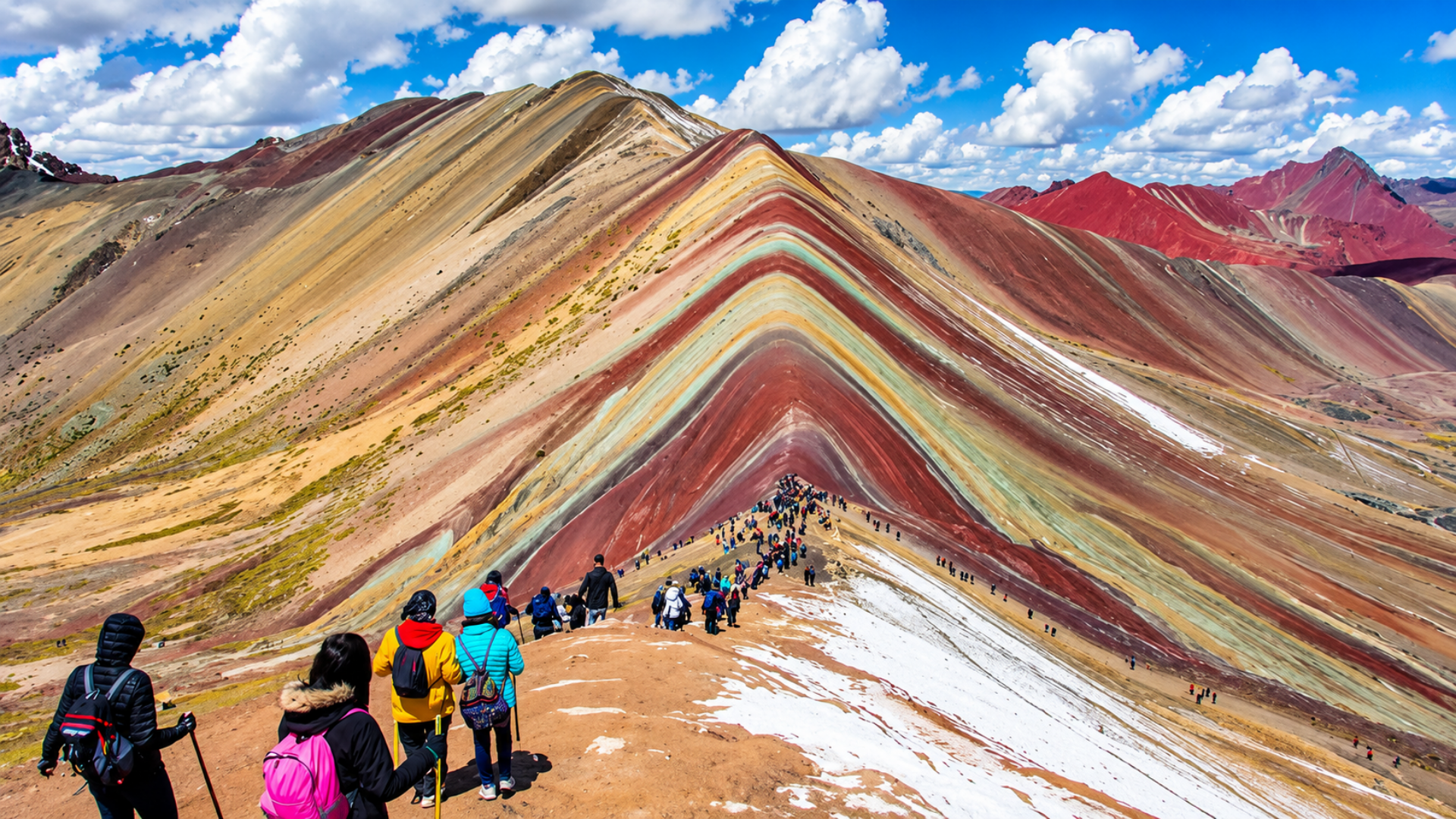
| Primary Attraction | Turquoise glacial waters | Mineral-striped mountain slopes |
| See tickets & prices |
Verdict: Select the laguna humantay tour for a shorter, intense vertical climb, or choose the rainbow peak for a higher-altitude endurance hike with panoramic Andean vistas.
Hand-picked experiences loved by thousands of travelers
12 hours
Free Cancellation
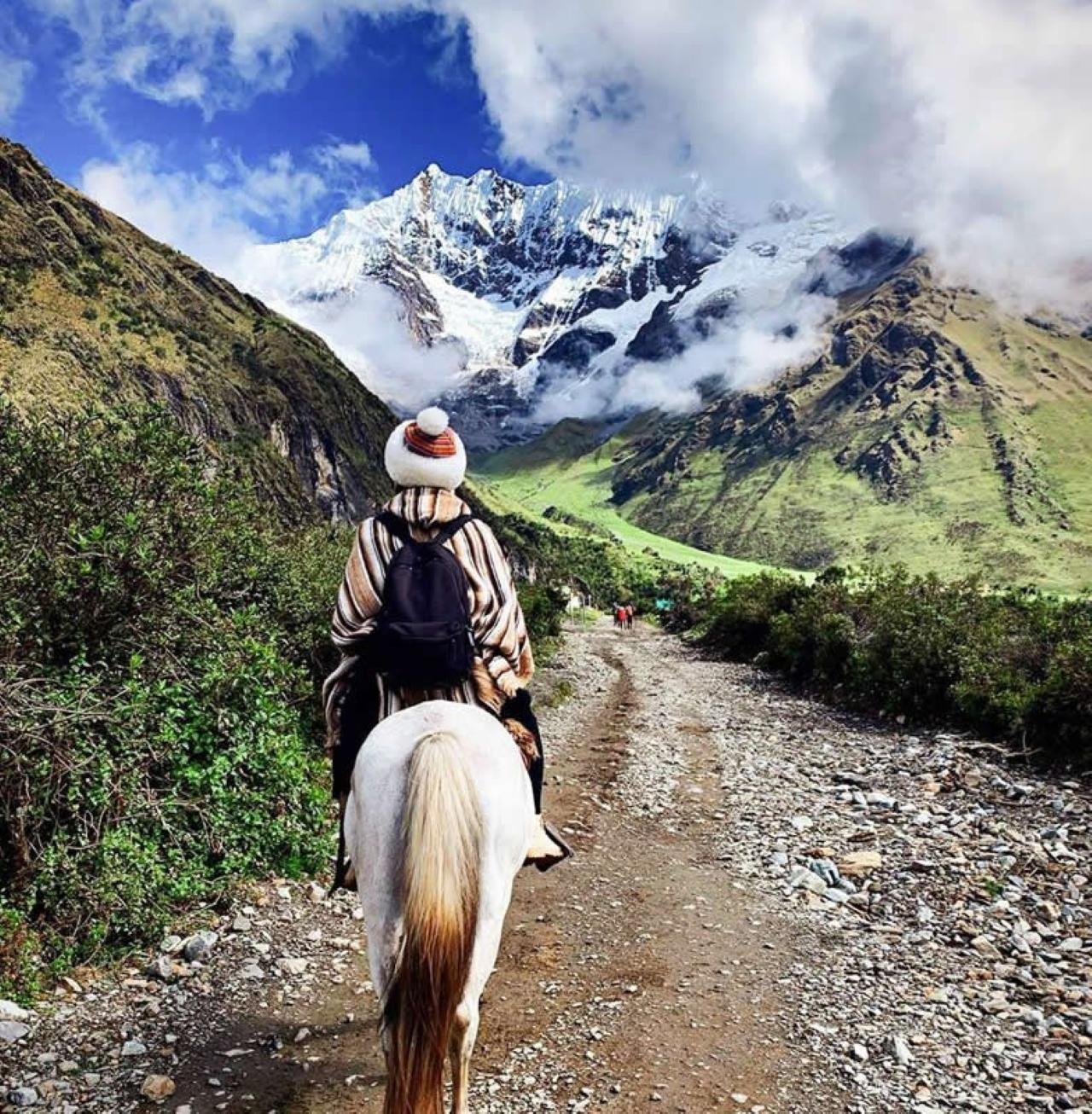
Journey to a high-altitude Andean lake on horseback, with meals and stunning Salkantay views included
13 hours
Free Cancellation
Trek to a stunning turquoise glacial lake nestled high in the Andes with views of Salkantay peak
4-5 days
Trek 75 km from Andean peaks to cloud forest, culminating in a guided tour of the legendary Inca citadel
2 days (13 hours per day)
Free Cancellation
Trek to two of Peru's most stunning natural wonders on this combined high-altitude adventure from Cusco
1 day
Free Cancellation
Journey through Andean valleys on horseback to turquoise Humantay Lake with breakfast and lunch included
2 days
Free Cancellation
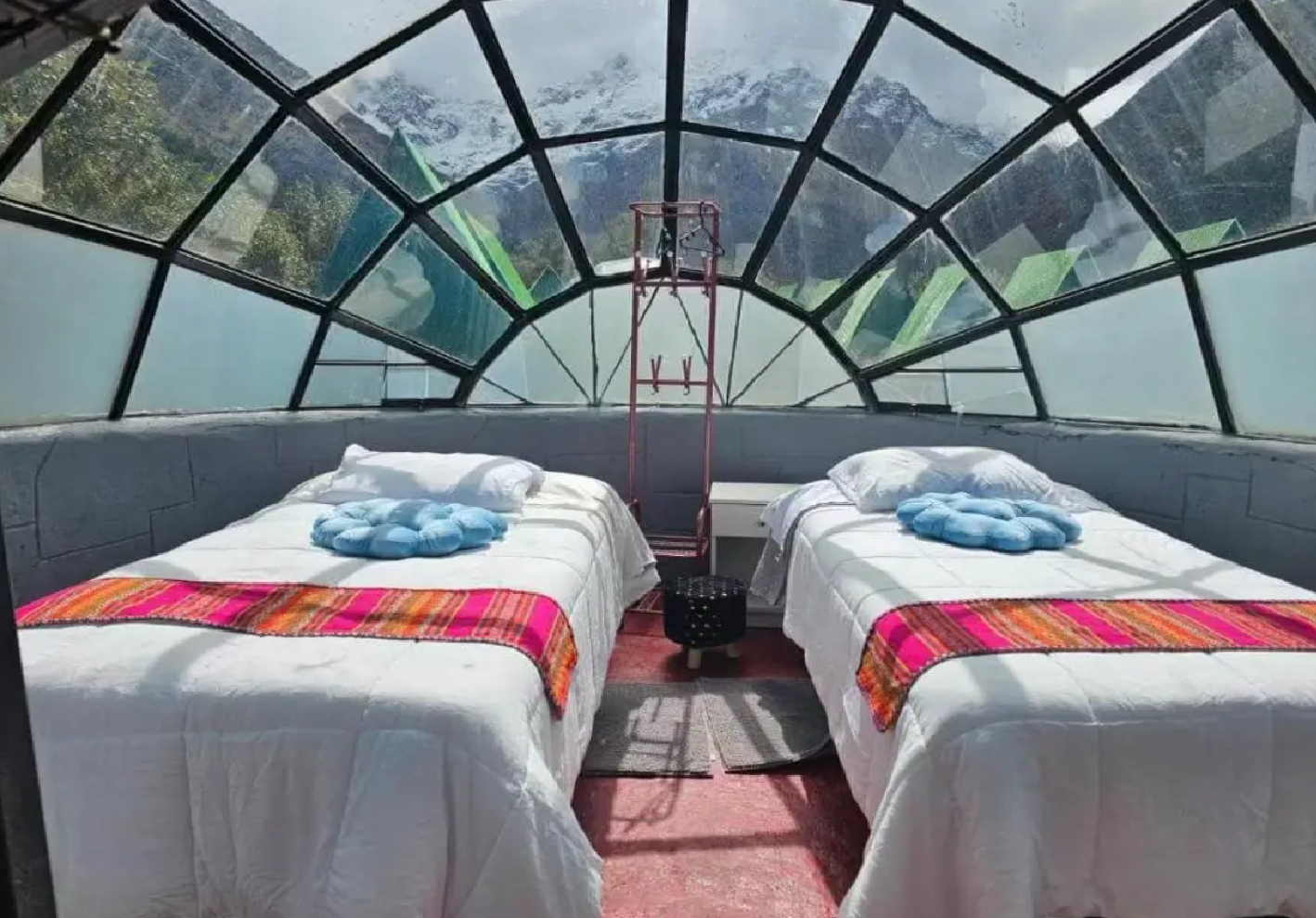
Trek Peru's second-highest peak region, sleep in glass igloos, and discover turquoise alpine lakes
10 hours
Free Cancellation
Journey to a turquoise glacial lake nestled beneath snow-capped Andean peaks on this exclusive full-day trek
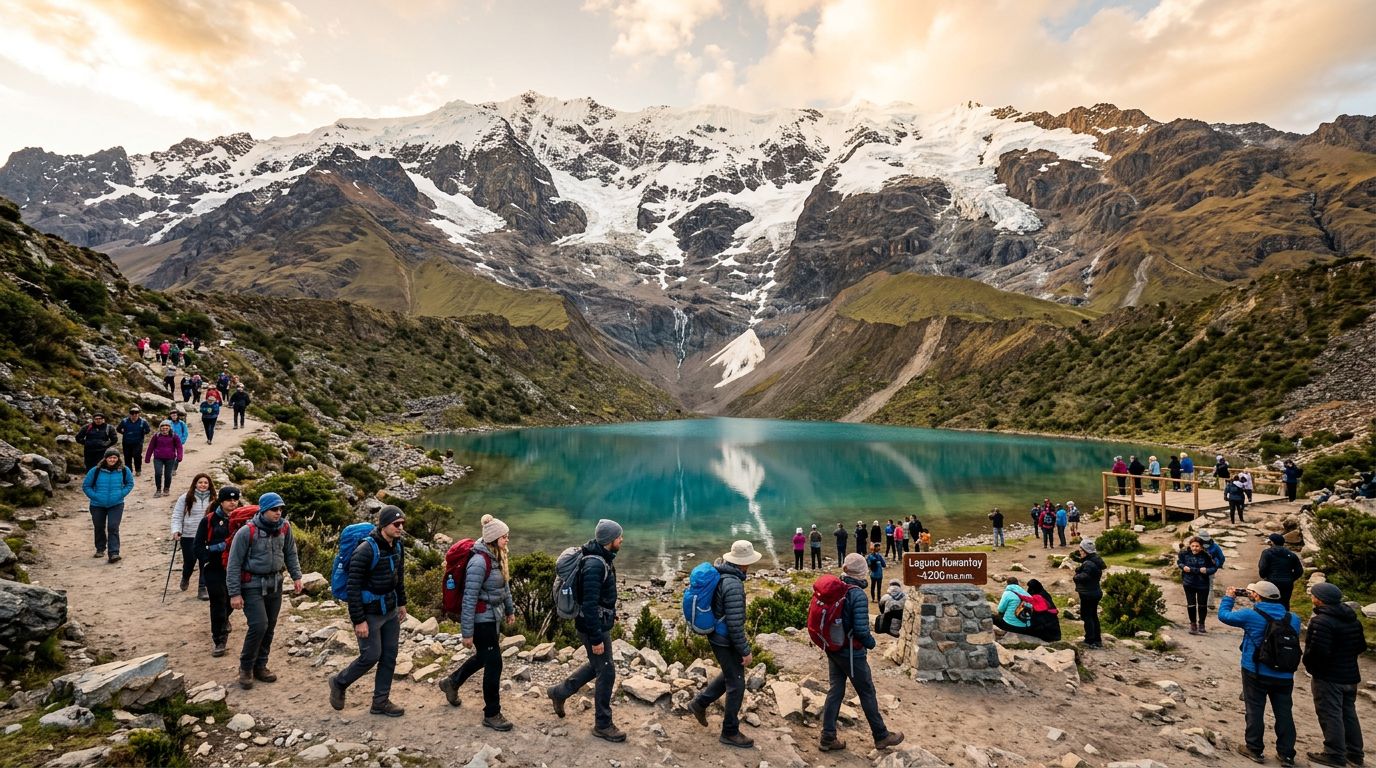
The massive glacial wall feeding the lake with turquoise meltwater.
The main attraction featuring its signature glacial-fed emerald hues.
A vantage point offering views toward the sacred Salkantay mountain.
Traditional stone offerings left by locals and visitors to Pachamama.
The final high-point trail section providing a birds-eye view.
You leave Cusco in darkness, the van winding through terraced valleys as the sun lifts behind Ausangate. By eight o'clock you reach Soraypampa, a windswept basin where pack horses graze beside stone corrals.
The trailhead sits at the far edge of the settlement, marked by a wooden gate and a handwritten sign reminding visitors to carry out all waste.
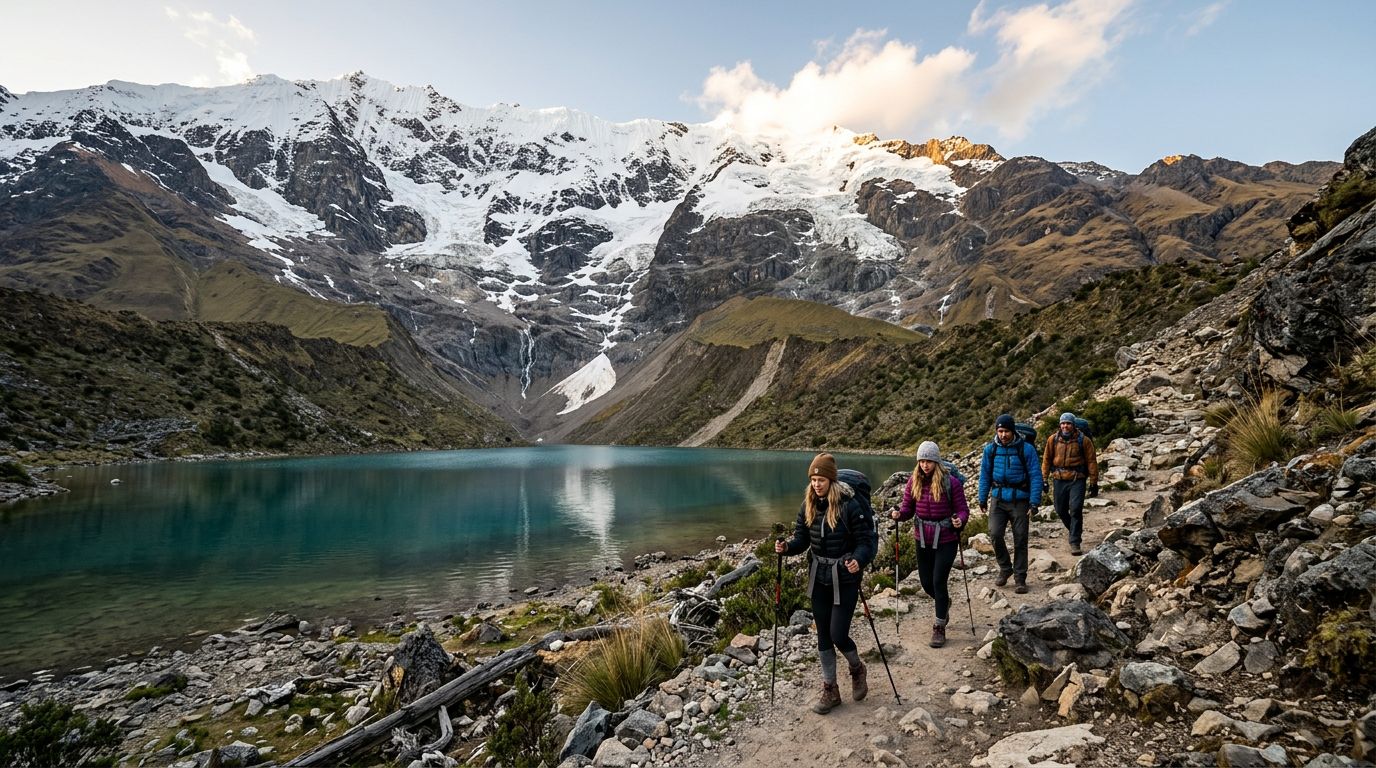
The climb begins gently through yellow ichu grass, then steepens as you enter the glacial moraine zone. Your breath shortens—the air at 4,000 meters holds 40 percent less oxygen than sea level—and you pace yourself in short bursts, pausing every fifty steps. Other trekkers pass on horseback, the animals picking careful footholds on the loose scree. At the final switchback you see it: a band of impossible blue cradled between gray ridges, the lake surface flat as lacquer.
You descend to the shore and crouch at the water's edge. The cold is immediate, numbing your fingertips in seconds. Behind you, Salkantay's icefields catch the late-morning sun, throwing fractured light across the valley. You sit on the gravel beach for twenty minutes, the wind steady against your jacket, before beginning the descent back to Soraypampa and the return drive to Cusco.
All the details about your upcoming adventure in one place
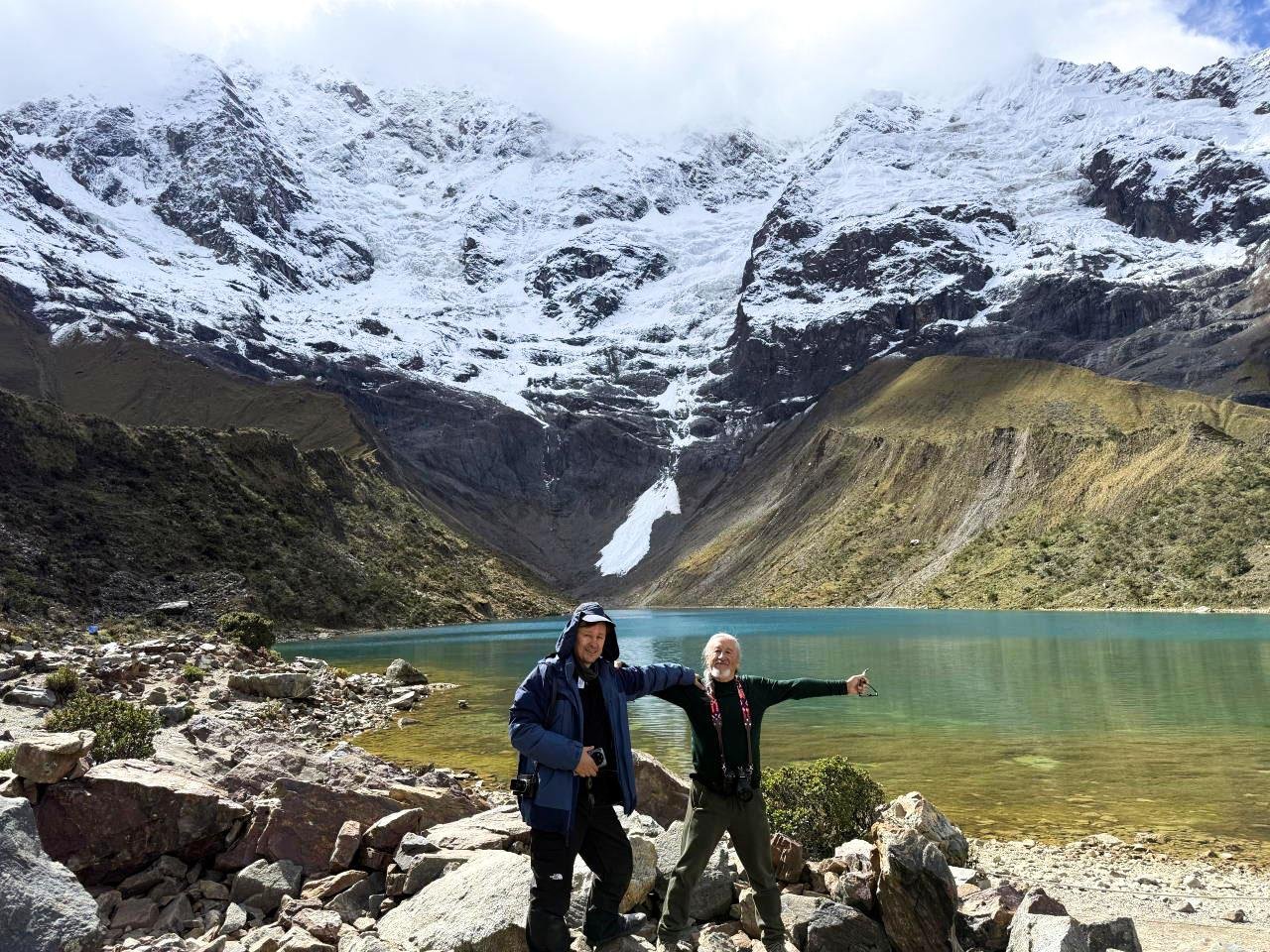
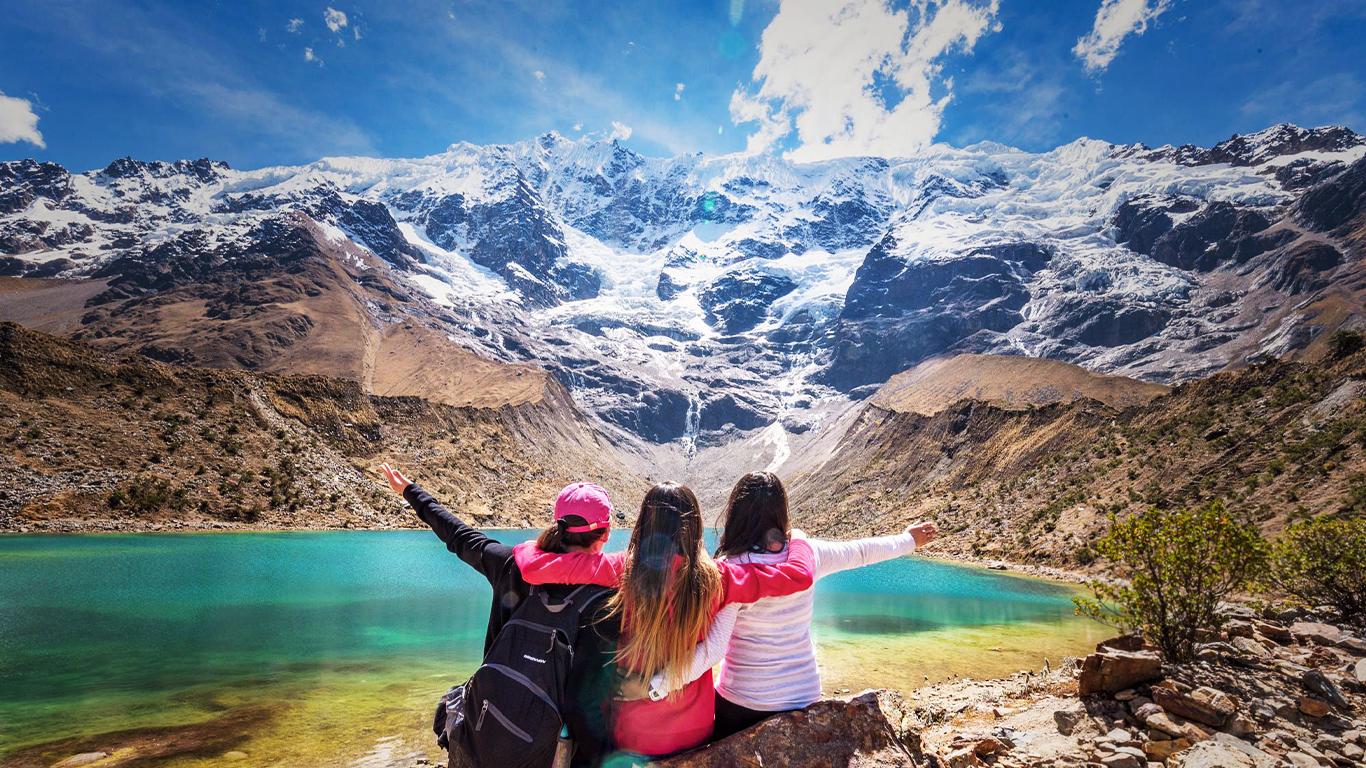
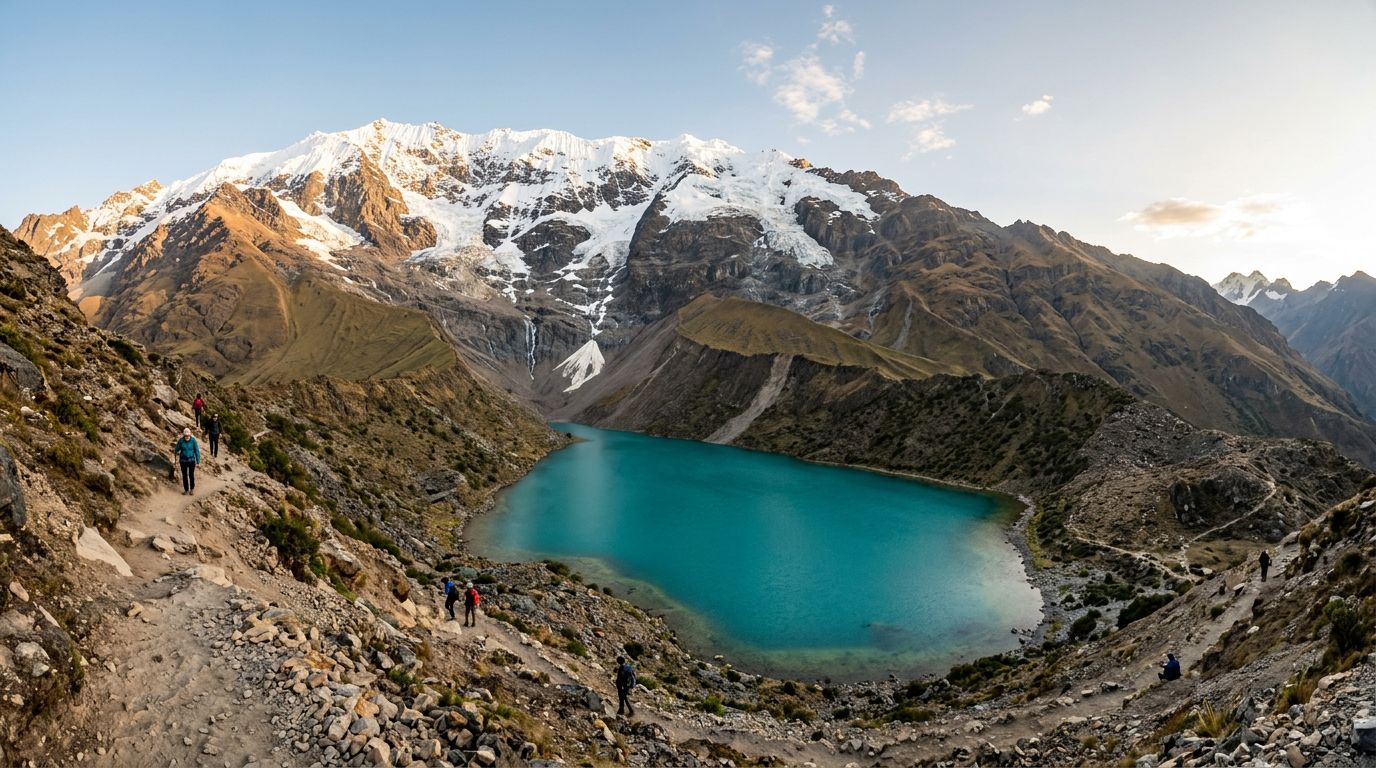
Laguna Humantay sits at 4,200 meters in a glacial amphitheater beneath Salkantay, the second-highest peak in the Cusco region. Meltwater from the Humantay Glacier feeds the lake year-round, staining it an electric turquoise visible from the ridgeline trail two kilometers below.
The color derives from suspended glacial flour—microscopic rock particles ground by the glacier's movement and held in suspension by the lake's cold, still water. Local Quechua communities regard Humantay as an apu, a mountain deity deserving offerings of coca leaves and chicha before any ascent.
The laguna humantay tour route begins in Soraypampa, a high puna grassland at 3,900 meters reached by a three-hour drive from Cusco through the Mollepata District. From the trailhead, the path climbs 300 vertical meters over 1.5 kilometers, switchbacking through ichu grass and rocky scree. The gradient averages 20 percent, steep enough that most trekkers require 60 to 90 minutes to reach the lakeshore. Horses can be hired at Soraypampa for those struggling with the altitude, though riders must dismount for the final 200 meters where the trail narrows.
Humantay gained prominence in the mid-2010s as an alternative to the congested Inca Trail, drawing trekkers seeking high-altitude landscapes without multi-day permits. Daily visitor numbers now exceed 300 during the May-to-September dry season, prompting the introduction of a 30-sol conservation fee administered at the Mollepata checkpoint. The fee funds trail maintenance and waste removal, necessary work given the site's fragile alpine ecology. Morning departures between six and ten o'clock offer the clearest weather—afternoon winds frequently obscure the lake surface with whitecaps, and clouds roll in from the Amazon basin by early afternoon, reducing visibility to less than 50 meters. The trailhead remains accessible year-round, though January and February bring daily rain that turns the upper trail into ankle-deep mud.
The lake's turquoise intensity peaks in the dry months when glacial melt rates are highest and suspended sediment concentration reaches maximum density. Visitors who arrive after noon often find the color muted by shadow as Salkantay's western face blocks direct sunlight from the water. Photography is best before eleven o'clock when the sun illuminates both the lake surface and the surrounding névé fields without the harsh contrast of midday overhead light.

Meltwater from the Humantay Glacier feeds the lake year-round, staining it an electric turquoise visible from the ridgeline trail two kilometers below.
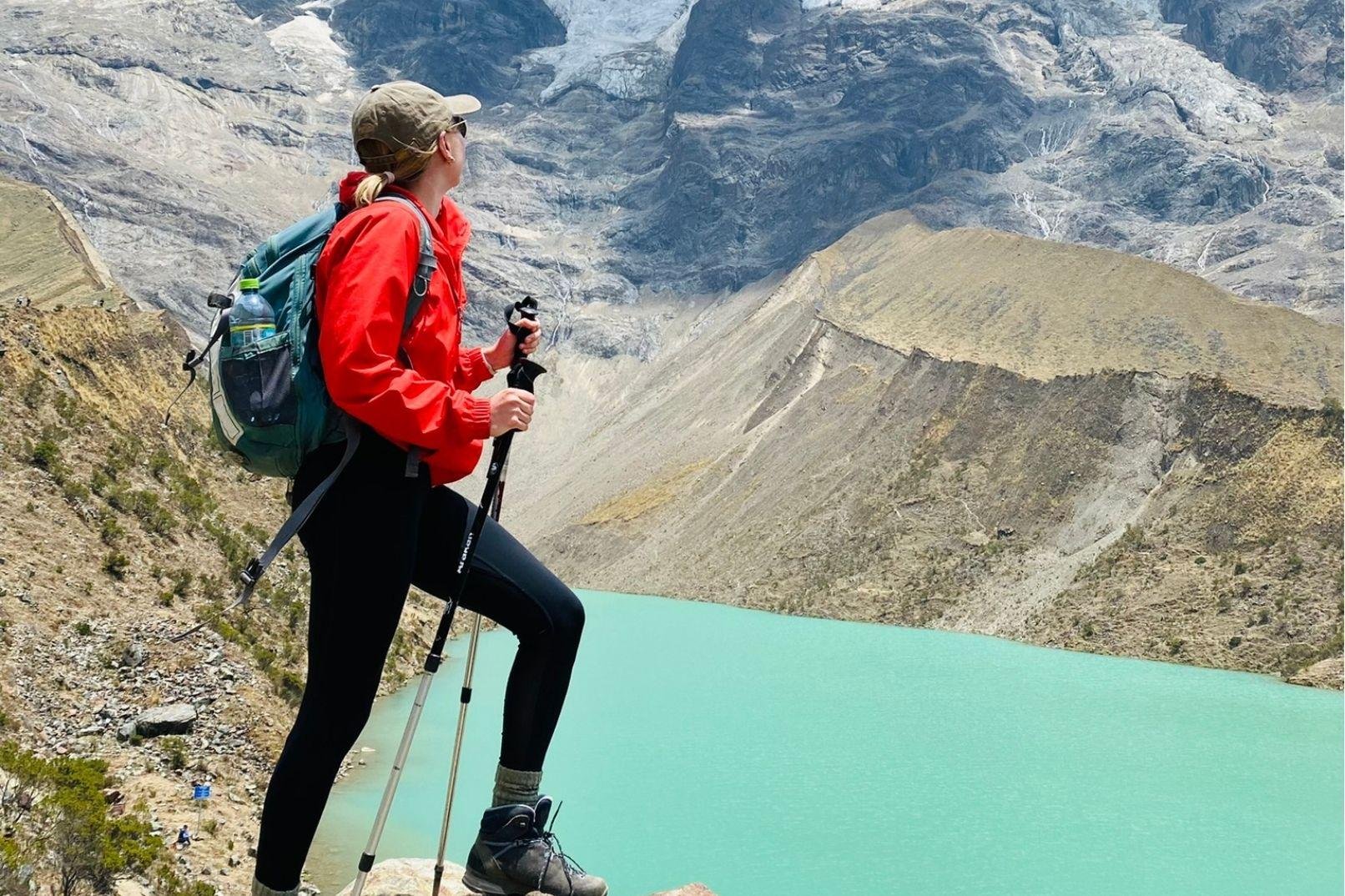
Dress in layers to adapt to rapidly changing high-altitude Andean weather. A moisture-wicking base layer, insulating fleece, and a waterproof outer shell are essential for any laguna humantay tour.
Use a small, lightweight daypack to carry your water, snacks, and extra layers. Security personnel at the Soraypampa checkpoint may perform brief checks to ensure prohibited items are not entering the protected reserve during your laguna humantay tour.
This location is highly photogenic; bring extra batteries, as cold temperatures drain power quickly. Wide-angle lenses are recommended to capture the scale of the glacier backdrop on your laguna humantay tour.
While children are permitted, the high altitude and demanding terrain make the trek challenging for young hikers. It is generally recommended for families with older children who are well-acclimatized to Cusco’s altitude before booking a laguna humantay tour.
The trail is a moderately difficult, steep, rocky ascent to 4,200 meters, making it unsuitable for wheelchair users or those with severe respiratory or heart conditions. Horse rental services are available at the start of the hike for those seeking physical assistance.
There are no dining facilities at the lake, so carry your own high-energy snacks like nuts or chocolate. Bring at least 1.5 liters of water to remain hydrated throughout your laguna humantay tour experience.
Opening Hours
05:00–17:00
Address
Soraypampa, Mollepata District, Anta Province, Cusco, Peru
Entry Fee
30 PEN (Conservation fee per foreign visitor, paid at the Mollepata checkpoint)
Best Arrival
06:00–10:00 — Clearer weather conditions, better lighting for photos, and to avoid afternoon winds.
Storage
Not available at the site; keep essentials in a daypack.
Navigation
Well-marked trail from Soraypampa trailhead.
Full refunds are typically available for bookings canceled at least 24–48 hours in advance, depending on your specific tour provider. Entrance fees (30 PEN) are non-refundable once paid at the Mollepata checkpoint.
Recommended time
3-4 hours on-site
Most visitors spend several hours exploring the glacial basin once they reach Soraypampa. A well-planned laguna humantay tour requires an early start from Cusco to navigate the steep trail efficiently. Following the guidance for the best arrival window of 06:00–10:00 helps you avoid the thickest crowds and ensures better visibility at this high-altitude Andes landmark. Booking laguna humantay tour tickets in advance provides clarity on logistics, though the hike intensity remains the primary factor for your total time spent at the turquoise waters.
Crowd levels through the day
Humantay Lake owes its existence to the retreat of the Humantay glacier, part of the broader Salkantay massif glacial system documented by the Peruvian Geographic Institute in the mid-twentieth century. Local Quechua communities from Soraypampa and Mollepata had known the lake for generations, calling it a sacred *apu* site where meltwater pooled in a cirque basin at 4,200 meters. The trail itself began as a narrow herding path used by arrieros moving livestock between highland pastures. No formal tourism infrastructure existed until the early 2000s, when the Peruvian government designated the Salkantay-Humantay corridor as part of the Regional Conservation Area Choquequirao in 2002, redirecting trekking traffic away from the saturated Inca Trail network. The transformation accelerated after 2010, when Cusco's regional tourism directorate partnered with Mollepata community councils to formalize access. A wooden staircase replaced the eroded switchbacks in 2012, and the first checkpoint—collecting a 10 PEN conservation fee—opened in 2013. By 2015, the laguna humantay tour had become one of the most photographed day hikes in the Andes, driven by social media and budget tour operators offering morning departures from Cusco. The influx brought friction: waste accumulation, trail widening, and disputes over fee distribution led to a community-led closure in August 2018, reopening only after stricter waste-management protocols and an increased 30 PEN foreign-visitor fee were implemented. Today, the lake remains community-managed under a rotating cooperative model established in 2019, with Soraypampa and Mollepata families alternating checkpoint duty and trail maintenance. The turquoise water—fed by glacial melt from the receding Humantay ice face—now draws over 150,000 visitors annually, though climate studies warn the glacier may vanish entirely by the 2040s. Pre-dawn laguna humantay tour departures, horse-rental stations at the trailhead, and the reinforced stone path installed in 2021 all reflect a landscape caught between preservation and the economic pressures of mass tourism.
Humantay Lake known only to Soraypampa herders and Quechua communities as a sacred *apu* site
Salkantay-Humantay corridor designated part of Regional Conservation Area Choquequirao by Peruvian government
Wooden staircase constructed to replace eroded switchbacks on the ascent trail
First checkpoint opens at trailhead, collecting 10 PEN conservation fee from visitors
Community-led closure enacted due to waste accumulation and fee-distribution disputes
Cooperative management model established, rotating control between Soraypampa and Mollepata families
Reinforced stone path installed to combat erosion from 150,000+ annual visitors
Position yourself at the highest point of the final ridge climb to capture the full turquoise basin against the Salkantay mountain range. This vantage point allows for a wide-angle composition of the glacial lake with the snow-capped peak reflecting in the water.
Planning a laguna humantay tour requires careful preparation due to the high altitude and steep terrain. Families should approach this mountain excursion with realistic expectations regarding physical exertion and acclimatization.
The path is entirely unpaved, consisting of rocky and steep mountain trails that are not suitable for strollers or wheelchairs. Parents must carry infants in specialized hiking backpacks to complete this Cusco lake tour successfully.
Due to the challenging altitude and trail conditions, this activity is best suited for older children and teenagers who can manage long periods of trekking. We recommend consulting a pediatrician before booking laguna humantay tour tickets to ensure your child is prepared for the thin air.
There are no baby-change facilities or running water amenities available at the site. Visitors must rely on the limited infrastructure found at the Soraypampa base when purchasing laguna humantay tour tours.
Expect a demanding climb that requires frequent stops to manage the elevation gain safely. Using a slow, steady pace helps children adapt to the environment during a typical laguna humantay tour tour.
Pack all necessary high-energy snacks and water in your daypack before departure. There are no dining facilities at the lake shore to support families, so supplies must be brought from Mollepata.
Dining options near the laguna humantay tour are extremely limited as the area remains a protected natural site. Most visitors participating in a Cusco Humantay Lake excursion bring packed snacks, though small local establishments in Soraypampa offer basic refreshments.
These basic kiosks offer hot coca tea and simple snacks for those needing energy before the ascent. They are convenient for quick purchases, but rely on laguna humantay tour tickets holders being self-sufficient for full meals.
Located within the base camp perimeter, this spot serves warm, hearty soups and coffee to hikers returning from the glacial basin. It is a functional choice for a post-hike meal while waiting for your transport for laguna humantay tour tour groups.
Often included with organized laguna humantay tour tours, these mobile kitchen setups provide standardized breakfast and lunch options at the trailhead. These services focus on efficiency to accommodate visitors within the 06:00–10:00 arrival window.
Everything you need to know for your journey
The Soraypampa access point is open daily from 05:00 to 17:00.
The hike is demanding due to altitude; it is recommended only for older children accustomed to high-elevation activities.
The 30 PEN conservation fee is paid directly at the Mollepata checkpoint upon arrival.
Basic facilities are available at the trailhead and mid-way point, but not at the lake itself.
We recommend arriving between 06:00 and 10:00 to enjoy the best weather and visibility.
No, swimming is strictly prohibited to protect the sacred nature and ecosystem of Humantay Lake.
The entrance fee is 30 PEN for foreign visitors, payable in cash at the checkpoint.
Yes, you are encouraged to bring your own hiking poles and sturdy footwear for the trek.
The trail is considered moderately difficult with a significant incline over a 2 km ascent to 4,200 meters.
Join thousands of happy travelers who have discovered this incredible experience
Book Your Experience Now