

Quick answer
Humantay Lake climate divides into a dry season (May through September) with clear mornings and afternoon temperatures near 10°C, and a wet season (November through March) bringing frequent rain and snow. April and October are transitional months with unpredictable conditions. The lake sits in a microclimate zone where mornings start below freezing year-round, warming only after sunrise, then cooling rapidly by mid-afternoon as clouds build over the Salkantay massif.
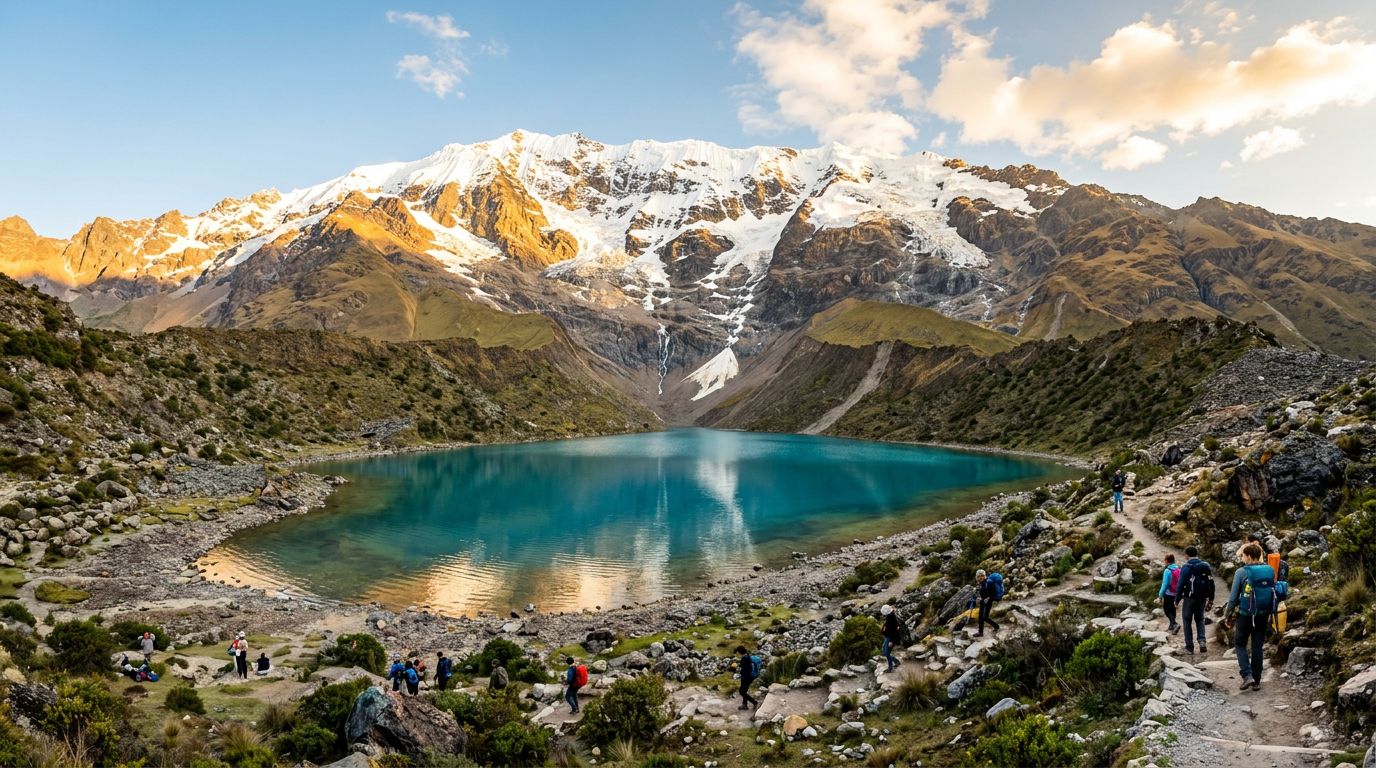
The turquoise lake owes its color to glacial melt from Salkantay peak, and that same glacial system creates the weather patterns hikers encounter on the trail. Morning temperatures at the Soraypampa trailhead hover between -5°C and 2°C regardless of season, while the lake itself sits 200 meters higher in an exposed basin that funnels wind from the Vilcabamba range. Dry-season months from May through September offer the most stable trekking window, with precipitation dropping to near zero in June and July. Daytime highs reach 12-15°C under direct sun, though shade and wind keep the effective temperature much lower. Afternoon clouds build over the peaks by 13:00 most days, and by 15:00 the basin often disappears into mist. The conservation area operates from 05:00 to 17:00 daily, but weather conditions deteriorate significantly after midday even during the dry months. Early departures from Cusco allow arrival at Soraypampa between 05:00 and 07:00, providing three to four hours of clear conditions before cloud cover thickens. The wet season transforms the trail into a mud channel punctuated by hail and sleet, particularly from December through February when afternoon storms arrive with little warning. March and April see transitional weather as the Altiplano monsoon retreats northward, while October and November mark the return of unstable patterns. Snow can fall at the lake in any month, but accumulation rarely persists beyond a few hours except during the wettest period. UV radiation remains intense year-round at this altitude, with the thin atmosphere offering minimal filtering even on overcast days. Climate data from the Mollepata district shows average annual precipitation of 800mm, with 75% falling between November and March. The 20 PEN conservation fee funds trail maintenance that becomes critical during the wet months when runoff carves new channels across the path. Visitors arriving during shoulder seasons should carry waterproof layers and expect to adjust plans based on real-time conditions observed from Soraypampa before beginning the 90-minute ascent.
“Morning temperatures at the trailhead hover between -5°C and 2°C regardless of season, while the lake basin sits 200 meters higher in an exposed zone that funnels wind from the Vilcabamba range.”
Understanding Laguna Humantay Weather and Best Visit Times
The optimal time to visit Laguna Humantay is during the dry season, specifically between May and September, when skies are clearest. Arriving within the 05:00–10:00 window is critical to secure ideal lighting and avoid the unstable weather that frequently develops in the afternoons.
Dry Season (May–September)
Moderate to high trafficClear skies, 0°C to 18°C
This period offers the most stable conditions for trekking and visibility. Cold nights contrast with clear, sunny days.
Wet Season (December–March)
Lower visitor numbersFrequent rain, 3°C to 16°C
Expect significant cloud cover and precipitation. Trails can become muddy and challenging during this timeframe.
Weekday mornings
Lower visitor numbers—
Arriving early minimizes crowd density at the lake edge. Stable conditions are maintained before typical afternoon cloud buildup begins.
Verdict: The best opportunity for a visit is a weekday morning between May and September, prioritizing the 05:00–10:00 arrival window.
Official Opening Hours for Laguna Humantay Weather Planning
Laguna Humantay is accessible daily to accommodate visitors planning around mountain weather conditions. Operations remain consistent throughout the week to ensure access for early-morning arrivals.
| Monday | 05:00–17:00 | |
|---|---|---|
| Tuesday | 05:00–17:00 | |
| Wednesday | 05:00–17:00 | |
| Thursday | 05:00–17:00 | |
| Friday | 05:00–17:00 | |
| Saturday | 05:00–17:00 | |
| Sunday | 05:00–17:00 |
Getting to Laguna Humantay Weather and Trail Conditions
Laguna Humantay is located in Soraypampa, Mollepata District, Anta Province, Cusco Region. The most common approach involves road transport from Cusco to the Soraypampa trailhead followed by a hike.
Cusco to Mollepata via Route 3S
Cusco to Mollepata (Public transport)
Mollepata to Soraypampa (Trailhead)
Checklist for Laguna Humantay Weather and Altitude Preparation
Humantay Lake sits at 4,200 meters with rapid weather shifts, so preparation focuses on managing cold, sun exposure, and altitude.
-
Pack insulated layers and a windproof jacket — Temperatures drop sharply above 4,000 meters, especially in shade and wind.
-
Bring high-SPF sunscreen and a wide-brimmed hat — UV radiation intensifies at altitude and reflects off snow and water.
-
Carry at least 2 liters of water per person — Hydration counters altitude effects and compensates for dry mountain air.
-
Wear broken-in waterproof hiking boots with ankle support — Trails turn muddy during rain, and loose scree requires stable footing.
-
Include altitude sickness medication if susceptible — The lake sits 1,800 meters above Cusco, and symptoms can appear quickly.
-
Confirm weather forecast 24 hours before departure — Afternoon storms are common; early starts reduce exposure to unstable conditions.
Check availability
Frequently asked questions about laguna humantay weather
Everything you need to know about laguna humantay weather